
Community & Culture
Alan Walking Tour - Colonial Heartbeat at Singapore Civil District

Alan Walking Tour - Colonial Heartbeat: A Walk Through Singapore’s Civil District
The Civil District of Singapore, established during the colonial period under Sir Stamford Raffles, is one of the most historically significant areas in the city. Raffles' influence on the development of this district can still be seen in the layout, architecture, and institutions that line its streets.
The Vision of Stamford Raffles:
In 1822, Raffles implemented the Raffles Town Plan, also known as the Jackson Plan, to structure the urban development of Singapore. His goal was to create a well-organized, multicultural trading hub that would facilitate commerce and governance. The Civil District was designated as the administrative and commercial center, and it featured grand colonial buildings, civic institutions, and open spaces, reflecting the British ideals of order and governance.
During this walking tour, we will share the stories of the along the civil district such as:-
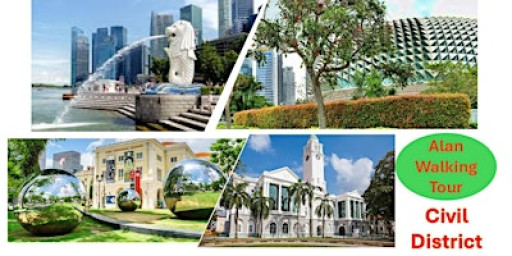
Esplanade – Theatres on the Bay: Begin at the iconic durian-shaped performing arts center. The Esplanade is known for hosting local and international performances and offers stunning views of the Marina Bay area, setting the tone for the rest of the tour
Government and Civic Buildings:
Raffles intended for the Civil District to house key government institutions, emphasizing British colonial power. These include:
Landing Site:
The Civil District marks the location where Raffles is believed to have landed in 1819, initiating the transformation of Singapore from a small fishing village into a vital British trading post. The site symbolizes the birth of modern Singapore. The Raffles Statue was erected nearby to commemorate his role in shaping the city’s future.
Commercial Activity and the Singapore River:
Raffles strategically placed the Civil District near the Singapore River, which was crucial for trade. As a bustling commercial hub, the riverbanks were lined with godowns (warehouses) that facilitated trade. The Fullerton Building, initially a post office and commercial building, became a symbol of this vibrant trading economy.
The Colonial Style and Urban Planning:
The architecture in the Civil District is a mix of neoclassical and colonial styles, heavily influenced by British building traditions. Many buildings, like the Victoria Theatre and Concert Hall, were designed to be grand and imposing, conveying the power and permanence of British rule.
Raffles’ Legacy in the Civil District Today:
Though the Civil District has evolved, many of Raffles' original concepts and structures remain integral to its identity. Today, landmarks like the Asian Civilisations Museum, The Arts House, and the National Gallery Singapore continue to anchor this area as a cultural and historical hub, blending the past with the modern city-state's rapid development.
Raffles' design for the Civil District created a foundation for the city’s organization, emphasizing commerce, governance, and multiculturalism. His legacy is visible not only in the physical layout of the district but also in Singapore’s ongoing commitment to preserving its heritage while adapting to its role as a global city.
Booking & Contact
· Minimum Group Size: 4 people
· Meet at City Hall MRT Exit B (near to St Andrew's Cathedral) at 8.30am
For queries or group bookings (corporate, private, or student groups), contact:
Alan Lim – +65 8699 2365 | alanlim2365@gmail.com
Notes & What to Bring
Cancellation Policy:
Medical reasons: Notify before tour; one-time free ticket transfer within 30 days (medical certificate required)
Written cancellations:
What to Bring:
Disclaimer: