
Performing & Visual Arts
Adult Beginners Art Class

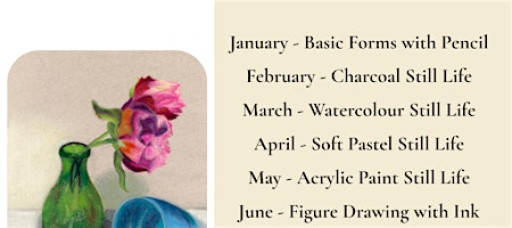
Beginner Adult Art Lessons Plan (January–June 2026)
Schedule: 2nd Saturday of each month, starting January 2026
Duration: 2 hours per session
Fee: £25 per person (minimum 6 participants)
Level: Beginner adults
Format: Guided studio practice with demonstrations and group discussion
Program Overview
This monthly course introduces adults to the fundamentals of drawing and painting through observation, technique, and creative exploration. Each session builds on previous lessons, moving from line and form to tone, colour, and figure work.
January — Lesson 1: Basic Forms
Medium: Graphite pencils and graphite sticks
Theme: Drawing geometric forms
Focus: Fundamentals of drawing, line quality, form, and measurement
Structure:
Warm-up: lines, circles, crosshatching, shading exercises
Remaining Time: Drawing still lifes of geometric shapes, learning pencil measurement, understanding light and shadow.
Outcomes:
• Control of line and tone
• Visual measurement and proportion
• Seeing 3D form on 2D surface
Materials:
• Graphite pencils (2H–6B)
• Graphite sticks
• Drawing paper
• Erasers
• Geometric shapes
February — Lesson 2: Everyday Objects in Charcoal
Medium: Charcoal
Theme: Translating basic forms into real objects
Focus: Exploring light and shadow, composition, and tonal range
Structure:
To Start: Charcoal handling, blending, erasing highlights
Remaining Time: Still life drawing with overlapping objects, focusing on contrast and composition
Outcomes:
• Understanding value range
• Observing and simplifying forms
• Using charcoal expressively
Materials:
• Charcoal sticks/pencils
• Paper suitable for charcoal
• Fixative
• Still life props (e.g. cups, bowls, fruit)
March — Lesson 3: Introducing Watercolour
Medium: Watercolour paint
Theme: Still life fruit painting
Focus: Introducing colour, water control, and layering techniques
Structure:
To Start: Colour mixing, washes, and brush techniques
Remaining Time: Painting still life, building colour through transparent layers
Outcomes:
• Understanding colour mixing and value
• Control of water and pigment
• Observing light and texture in colour
Materials:
• Watercolour paints
• Brushes
• Watercolour paper
• Palette
• Water containers
• Still life setup of fruits
April — Lesson 4: Vase and Flowers in Soft Pastel
Medium: Soft pastels
Theme: Still life with vase, flower, and fruit
Focus: Colour blending, composition, and layering
Structure:
To Start: Colour theory basics (warm/cool, complementary colours)
Remaining Time: Drawing still life of vase, flower, and fruit arrangement
Outcomes:
• Blending colour and layering techniques
• Composition and focal point development
• Observing colour harmony and light
Materials:
• Soft pastels
• Pastel paper
• Fixative
• Vase with flower and fruit still life setup
May — Lesson 5: Still Life in Acrylics
Medium: Acrylic paint
Theme: Repeat of previous still life with new arrangement
Focus: Introducing opaque media, layering, and texture
Structure:
To Start: Brushwork, mixing, blending, and layering
Remaining Time: Painting still life with vase, flower, and fruit in new composition
Outcomes:
• Understanding differences between transparent (watercolour) and opaque (acrylic) media
• Building form through layering and colour blocking
• Developing painting confidence
Materials:
• Acrylic paints
• Brushes
• Canvas boards or heavy paper
• Palettes
• Water containers
• Still life setup
June — Lesson 6: Introduction to Figure Drawing
Medium: Ink
Theme: Simple wooden figure poses and non-dominant hand reference
Focus: Proportion, gesture, and simplified anatomy
Structure:
To Start: Gesture drawing warm-ups (short timed sketches)
Remaining Time: Drawing wooden mannequin in poses and using non-dominant hand as reference
Outcomes:
• Understanding human proportion and movement
• Observational skills through gesture and contour
• Building confidence through expressive drawing
Materials:
• Ink (bottled or pen)
• Sketch paper
• Wooden mannequin figure