
Science & Technology
13th Seoul Mediacity Biennale, Séance: Technology of the Spirit

Please join us on January 22 at 7pm for the launch of the illustrated catalogue of the 13th Seoul Mediacity Biennale, Séance: Technology of the Spirit, featuring a conversation with catalogue contributor Alexandra Munroe, as well as a screening of Onisaburō Deguchi’s Shōwa no Shichifukujin (The Seven Lucky Gods). The event will be introduced by the catalogue's English editor, Ben Eastham.
For this launch event, pioneering curator Alexandra Munroe will be in conversation with the exhibition’s curators–Anton Vidokle, Hallie Ayres, and Lukas Brasiskis–to discuss the Japanese religious movement Oomoto and the work of Onisaburō Deguchi, the movement’s former spiritual leader, whose work was featured in the Biennale. The evening will commence with a screening of Deguchi’s Shōwa no Shichifukujin (The Seven Lucky Gods).
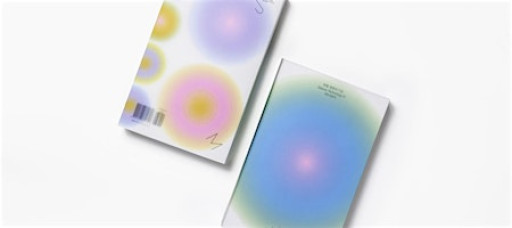
The Biennale’s richly illustrated publication documents, contextualizes, and expands upon the exhibition’s desire to explore the entanglement of art and spiritual practice from the dawn of modernity to the present, connecting the mystics and mediums who prefigured the emergence of modern and abstract art to contemporary artists from around the world. Comprising 340 color pages across 650 in total, this bilingual English–Korean publication presents a map of that complex historical relationship. Eleven newly commissioned texts reflect on the influence of marginalized belief systems on the development of modern and contemporary art, collectively proposing an alternative—or complement—to the prevailing formalist, social, or materialist accounts.
Séance: Technology of the Spirit is co-published by Seoul Museum of Art and Mediabus and edited in English by Ben Eastham and in Korean by Jihee Jun. It is designed by nonplace studio (Shanghai). The publication will be available for purchase at the event, and is also available through The Book Society (Seoul), Idea Books, and online here.
Film
Onisaburō Deguchi, Shōwa no Shichifukujin (The Seven Lucky Gods) (1935, 28 minutes)
The silent film Shōwa no Shichifukujin—in which the seven lucky gods of the title are played by Onisaburō in elaborate costumes—exemplifies Onisaburō’s pioneering use of new media to spread its word. The calligraphic title cards were handwritten in classical meter by Onisaburō, who also composed the accompanying poems. Most copies of the film were destroyed by the Japanese authorities during its campaign to suppress Oomoto. Yet the movement continues to this day, with art at the heart of its spiritual program.
For more information, please contact program@e-flux.com.
Accessibility
–Two flights of stairs lead up to the building’s front entrance at 172 Classon Avenue.
–For elevator access, please RSVP to program@e-flux.com. The building has a freight elevator which leads into the e-flux office space. Entrance to the elevator is nearest to 180 Classon Ave (a garage door). We have a ramp for the steps within the space.
–e-flux has an ADA-compliant bathroom. There are no steps between the event space and this bathroom.