

AI-Powered Crowd Analytics for Large Events: Enhancing Safety and Operational Efficiency
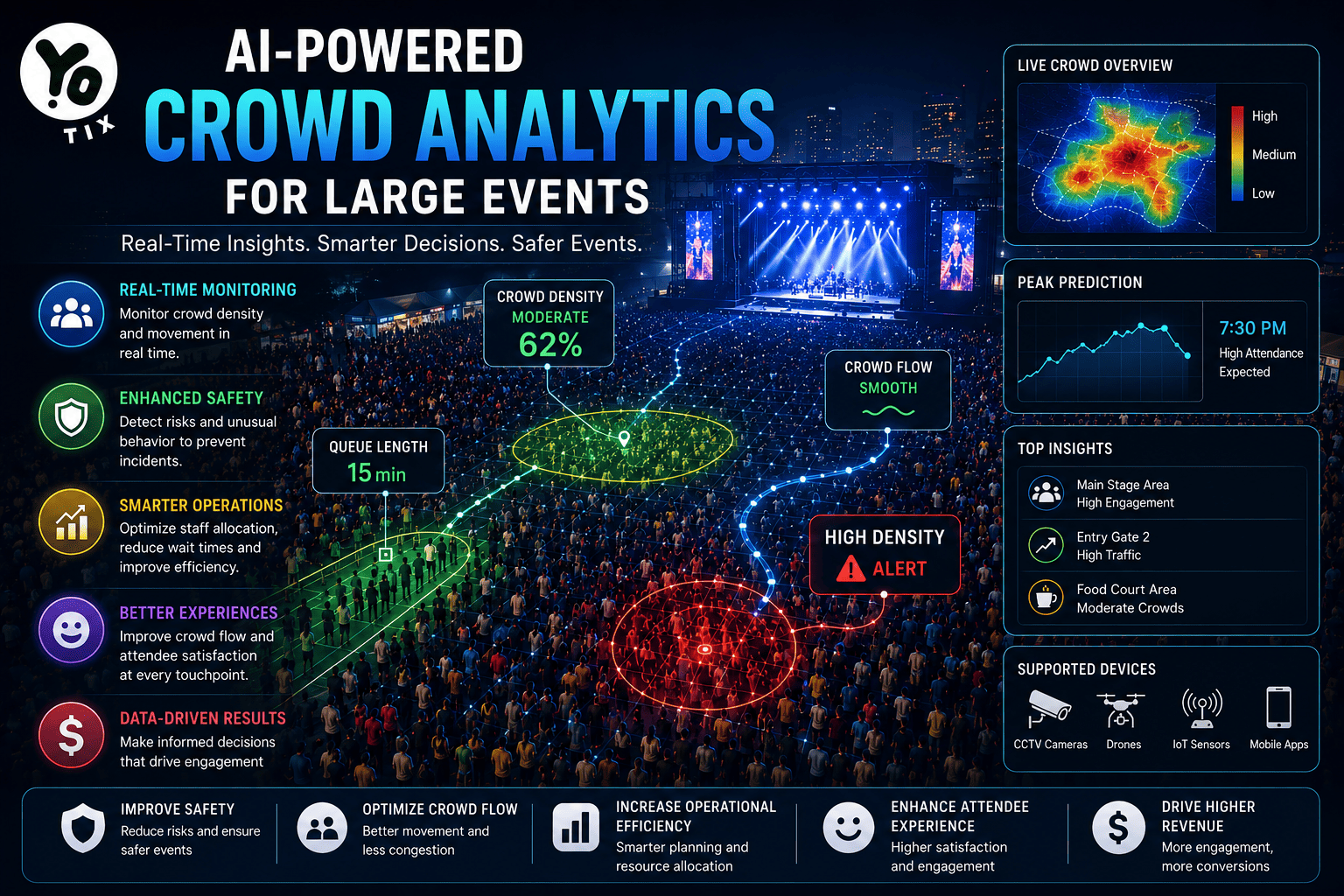
Large-scale events have always presented unique challenges for organizers. Whether it’s a music festival, sports tournament, trade show, corporate conference, or cultural celebration, managing thousands of attendees efficiently requires careful planning and real-time decision-making.
Traditionally, crowd management relied on manual monitoring, security personnel, surveillance cameras, and post-event analysis. While these methods helped maintain order, they often lacked the speed and accuracy required to address issues before they escalated.
Today, Artificial Intelligence (AI) is transforming event management through AI-powered crowd analytics. By combining computer vision, machine learning, real-time video analysis, and predictive intelligence, organizers can gain deeper insights into crowd behavior and make informed decisions instantly.
As attendee expectations rise and event venues become increasingly crowded, AI-powered crowd analytics is emerging as one of the most valuable technologies in the modern event industry.
What is AI-Powered Crowd Analytics?
AI-powered crowd analytics refers to the use of artificial intelligence and computer vision technologies to analyze crowd behavior, movement patterns, density levels, and attendee interactions in real time.
The technology typically works by processing data from:
- CCTV cameras
- Smart cameras
- Drones
- IoT sensors
- Access control systems
- Mobile data signals
AI algorithms then analyze the information to generate actionable insights about:
- Crowd density
- Traffic flow
- Queue lengths
- Occupancy levels
- Potential safety risks
- Attendee behavior patterns
Unlike traditional surveillance systems that simply record footage, AI-powered analytics can interpret data automatically and provide instant alerts when unusual situations occur.
Why Crowd Analytics Matters for Large Events
Managing large crowds is one of the biggest challenges in event operations. Poor crowd management can lead to:
- Long waiting times
- Congestion
- Reduced attendee satisfaction
- Security risks
- Emergency response delays
- Revenue loss
According to a report by Allied Market Research, the global crowd analytics market is expected to grow significantly over the next decade as organizations increasingly adopt AI-powered monitoring systems.
Furthermore, studies indicate that nearly 70% of attendees say event experience directly influences whether they will return to future events, highlighting the importance of smooth crowd movement and venue management.
AI-powered crowd analytics helps event organizers create safer and more enjoyable experiences while improving operational efficiency.
Real-Time Crowd Monitoring
One of the most significant advantages of AI-powered crowd analytics is real-time monitoring.
Instead of relying solely on security teams watching dozens of screens simultaneously, AI systems automatically detect:
- Overcrowded zones
- Unusual movement patterns
- Restricted area access
- Traffic bottlenecks
- Emergency situations
This allows event organizers to respond immediately before issues escalate. For example, if a concert venue begins experiencing dangerous crowd density near a stage area, AI can instantly notify security teams so corrective action can be taken.
Research suggests that proactive crowd management can significantly reduce the likelihood of crowd-related incidents and improve attendee safety.
Improving Event Safety and Security
Safety remains the top priority for every event organizer.
AI-powered crowd analytics enhances security by providing continuous monitoring and intelligent threat detection.
Capabilities include:
Suspicious Activity Detection
AI systems can identify unusual behaviors such as:
- Unauthorized access
- Abandoned objects
- Loitering in restricted areas
- Sudden crowd surges
Emergency Response Support
During emergencies, AI can:
- Identify evacuation routes
- Monitor crowd movement
- Locate high-risk zones
- Support first responders with real-time data
According to industry reports, organizations utilizing AI-powered surveillance technologies often experience faster incident detection compared to traditional monitoring methods.
Reducing Queue Times and Congestion
Long queues are one of the most common attendee complaints at large events.
Whether waiting for:
- Event entry
- Food vendors
- Merchandise booths
- Restrooms
- Transportation services
excessive waiting times can negatively impact attendee satisfaction.
AI-powered crowd analytics helps by:
- Monitoring queue lengths
- Predicting congestion
- Optimizing staff deployment
- Redirecting attendees to less crowded areas
Studies show that reducing waiting times can significantly improve overall event satisfaction scores and increase attendee spending within the venue.
Enhancing Attendee Experience
Modern event attendees expect seamless experiences from arrival to departure.
AI-powered crowd analytics helps organizers understand attendee behavior and improve event experiences through data-driven decisions.
Key insights include:
- Popular attractions
- Peak traffic periods
- Visitor movement patterns
- High-engagement zones
- Session attendance rates
By understanding how attendees interact with an event, organizers can optimize layouts, schedules, and services for future events.
In highly competitive markets, attendee experience has become a major differentiator for successful events.
Predictive Crowd Management
One of the most powerful features of AI is predictive analytics.
Rather than simply reacting to problems, AI systems can anticipate issues before they occur.
Using historical and real-time data, AI can predict:
- Crowd congestion
- Venue occupancy levels
- Traffic flow changes
- Staffing requirements
- Security risks
Organizers hosting large events in Jersey-city can use predictive analytics to identify peak entry periods and allocate resources more effectively before attendees arrive.
This proactive approach reduces operational stress and improves event outcomes.
Optimizing Venue Utilization
Venue operators constantly seek ways to maximize space utilization without compromising comfort or safety.
AI crowd analytics provides valuable insights into:
- Occupancy rates
- Traffic patterns
- Underutilized areas
- High-demand locations
This data helps organizers make smarter decisions about:
- Booth placement
- Seating arrangements
- Food court positioning
- Emergency exits
- Traffic management
According to event management studies, optimized venue layouts can improve visitor flow by more than 20% in certain event environments.
Supporting Smart Event Operations
AI-powered crowd analytics is becoming a critical component of smart event ecosystems.
Integrated with other technologies, AI can support:
- Smart ticketing systems
- Facial recognition access control
- Parking management
- Digital signage
- Mobile event applications
This interconnected ecosystem enables organizers to create highly efficient event environments while delivering personalized attendee experiences.
As smart venue technologies continue evolving, AI-powered crowd intelligence will play an increasingly important role.
Data-Driven Decision Making
Historically, many event management decisions relied heavily on assumptions and post-event surveys.
AI changes this approach by providing objective, real-time data.
Organizers can measure:
- Attendance trends
- Visitor engagement
- Crowd movement
- Peak activity periods
- Venue performance
This information supports better decision-making before, during, and after events.
According to Deloitte research, organizations using data-driven decision-making strategies are significantly more likely to achieve operational success compared to those relying solely on intuition.
Revenue Opportunities Through Crowd Analytics
Beyond safety and operational efficiency, AI-powered crowd analytics can directly impact revenue generation.
Insights from attendee behavior help organizers:
- Improve sponsorship placements
- Optimize vendor locations
- Increase concession sales
- Enhance premium experiences
- Maximize exhibit engagement
For example, if analytics reveal a high-traffic area within a venue, organizers can position sponsors or premium vendors strategically to maximize visibility and revenue.
Data-driven optimization creates measurable business value beyond operational improvements.
Challenges of Implementing AI Crowd Analytics
While the benefits are substantial, organizations should also consider implementation challenges.
Common challenges include:
Initial Investment Costs
Advanced AI systems require investments in:
- Cameras
- Infrastructure
- Software platforms
- Integration services
Data Privacy Considerations
Organizations must ensure compliance with privacy regulations and transparency regarding data collection practices.
Staff Training
Teams need proper training to interpret analytics and act on insights effectively.
Despite these challenges, the long-term benefits often outweigh the initial investment for large-scale event operations.
Future of AI-Powered Crowd Analytics
The future of crowd analytics is incredibly promising.
Emerging innovations include:
- AI-powered digital twins
- Advanced behavioral prediction
- Real-time crowd simulation
- Autonomous security monitoring
- Integrated smart city connectivity
Industry analysts predict that AI adoption across event management will continue growing as organizers seek smarter ways to improve safety, efficiency, and attendee experiences.
As event sizes increase and audience expectations evolve, real-time intelligence will become essential rather than optional.
Conclusion
AI-powered crowd analytics is revolutionizing the way large events are managed. By leveraging artificial intelligence, computer vision, and predictive analytics, event organizers can gain unprecedented visibility into attendee behavior and venue operations.
From enhancing safety and reducing congestion to improving attendee experiences and increasing revenue opportunities, the benefits of AI-powered crowd intelligence are substantial.
As the event industry becomes increasingly data-driven, organizations that embrace AI-powered crowd analytics will be better positioned to deliver safer, smarter, and more successful events.
The future of event management lies in intelligent decision-making, and AI-powered crowd analytics is leading that transformation.
FAQs – AI-Powered Crowd Analytics for Large Events
What is AI-powered crowd analytics?
AI-powered crowd analytics uses artificial intelligence, computer vision, and real-time data analysis to monitor crowd behavior, movement patterns, occupancy levels, and potential safety risks during large events.
How does AI crowd analytics improve event safety?
AI systems can detect overcrowding, unusual crowd behavior, unauthorized access, abandoned objects, and potential security threats in real time, allowing event organizers to respond quickly and prevent incidents.
Why is crowd analytics important for large events?
Crowd analytics helps organizers manage attendee flow, reduce congestion, improve security, enhance visitor experiences, and optimize venue operations, making events safer and more efficient.
What technologies are used in AI-powered crowd analytics?
AI crowd analytics typically combines:
- Computer Vision
- Machine Learning
- CCTV and Smart Cameras
- IoT Sensors
- Facial Recognition Systems
- Real-Time Data Processing
- Predictive Analytics
Can AI crowd analytics reduce waiting times at events?
Yes. AI can monitor queue lengths in real time and help organizers deploy staff efficiently, open additional entry points, or redirect attendees to less crowded areas, reducing wait times significantly.
How does predictive crowd analytics work?
Predictive analytics uses historical and real-time data to forecast crowd movement, congestion hotspots, attendance patterns, and resource requirements before problems occur.
What are the benefits of AI-powered crowd monitoring for event organizers?
Key benefits include:
- Improved safety and security
- Better crowd flow management
- Reduced operational costs
- Enhanced attendee experiences
- Data-driven decision-making
- Increased venue efficiency
- Higher event profitability
Can AI crowd analytics help during emergencies?
Absolutely. AI systems can identify evacuation routes, track crowd movement, locate high-density areas, and provide real-time information to security teams and emergency responders.
How does AI improve attendee experiences at events?
By reducing congestion, minimizing wait times, improving venue navigation, and optimizing resource allocation, AI helps create smoother and more enjoyable event experiences.
Is AI-powered crowd analytics suitable for all types of events?
Yes. AI crowd analytics can be used for:
- Music Festivals
- Concerts
- Sports Events
- Conferences
- Trade Shows
- Exhibitions
- Corporate Events
- Public Gatherings
- Cultural Festivals
Can crowd analytics increase event revenue?
Yes. By identifying high-traffic areas, optimizing vendor placements, improving sponsor visibility, and enhancing attendee experiences, AI analytics can help increase event revenue opportunities.
What challenges do organizations face when implementing AI crowd analytics?
Common challenges include:
- Initial technology investment
- Infrastructure requirements
- Data privacy compliance
- Staff training
- System integration with existing event technologies
How does AI crowd analytics support smart venues?
AI integrates with smart ticketing systems, access control, digital signage, parking management, and mobile event apps to create a connected and intelligent event ecosystem.
What industries benefit most from AI-powered crowd analytics?
Industries that benefit include:
- Event Management
- Sports & Entertainment
- Transportation
- Smart Cities
- Retail
- Hospitality
- Tourism
- Public Safety
What is the future of AI-powered crowd analytics?
Future developments include AI-powered digital twins, advanced behavioral prediction, autonomous security monitoring, real-time crowd simulations, and deeper integration with smart city infrastructure, making events safer and more efficient than ever before.