

How AI Search is Changing Event Marketing?
The event industry is experiencing one of the biggest digital transformations in its history. From concerts and festivals to business conferences, exhibitions, sports tournaments, and entertainment experiences, event organizers are now competing in an online-first world where audience attention is becoming harder to capture.
Traditional event marketing strategies that once relied heavily on posters, basic social media ads, and email blasts are no longer enough. Today’s audiences expect highly personalized recommendations, instant information, and seamless digital experiences.
This shift is being driven by Artificial Intelligence (AI) and AI-powered search systems.
AI search is changing how people:
- Discover events
- Search for entertainment
- Buy tickets
- Interact with event brands
- Consume event-related content
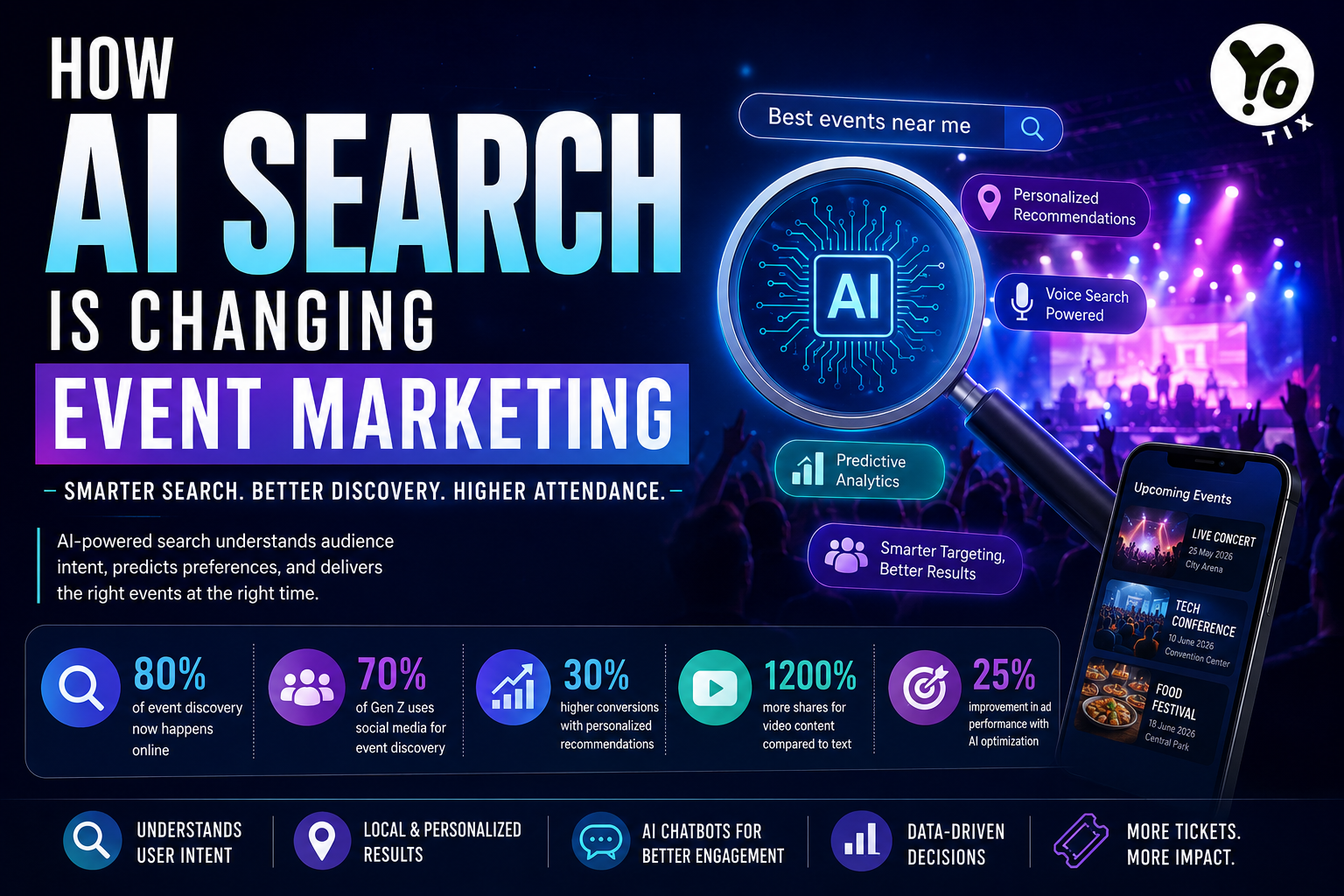
According to industry reports, over 80% of consumers now discover events through digital platforms, while AI-powered recommendation systems continue influencing how users engage with online content.
For event organizers, this means the future of event marketing is no longer just about visibility — it is about intelligent audience discovery and personalized engagement.
What is AI Search?
AI search refers to search systems powered by artificial intelligence that understand:
- User behavior
- Search intent
- Audience interests
- Context
- Personal preferences
- Engagement patterns
Unlike traditional search engines that primarily focus on exact keyword matching, AI-powered search systems analyze what users actually mean and what they are likely to be looking for.
Examples of AI-powered search systems include:
- Google AI Search experiences
- ChatGPT-based discovery
- Siri and Alexa voice assistants
- TikTok recommendation algorithms
- Instagram content feeds
- YouTube AI recommendations
These systems use machine learning and behavioral data to deliver more relevant and personalized results.
This is dramatically changing the way events are marketed online.
How Event Discovery Has Changed?
A few years ago, audiences discovered events mainly through:
- Flyers
- Billboards
- Facebook event pages
- Word of mouth
- Event listing websites
Today, AI-driven systems dominate audience discovery.
Modern users now find events through:
- Personalized social media feeds
- AI-generated recommendations
- Voice search
- Short-form videos
- Influencer content
- Conversational AI tools
Research shows that over 70% of Gen Z users now use social media platforms as discovery engines, often searching for events directly through TikTok, Instagram, and YouTube rather than traditional search engines.
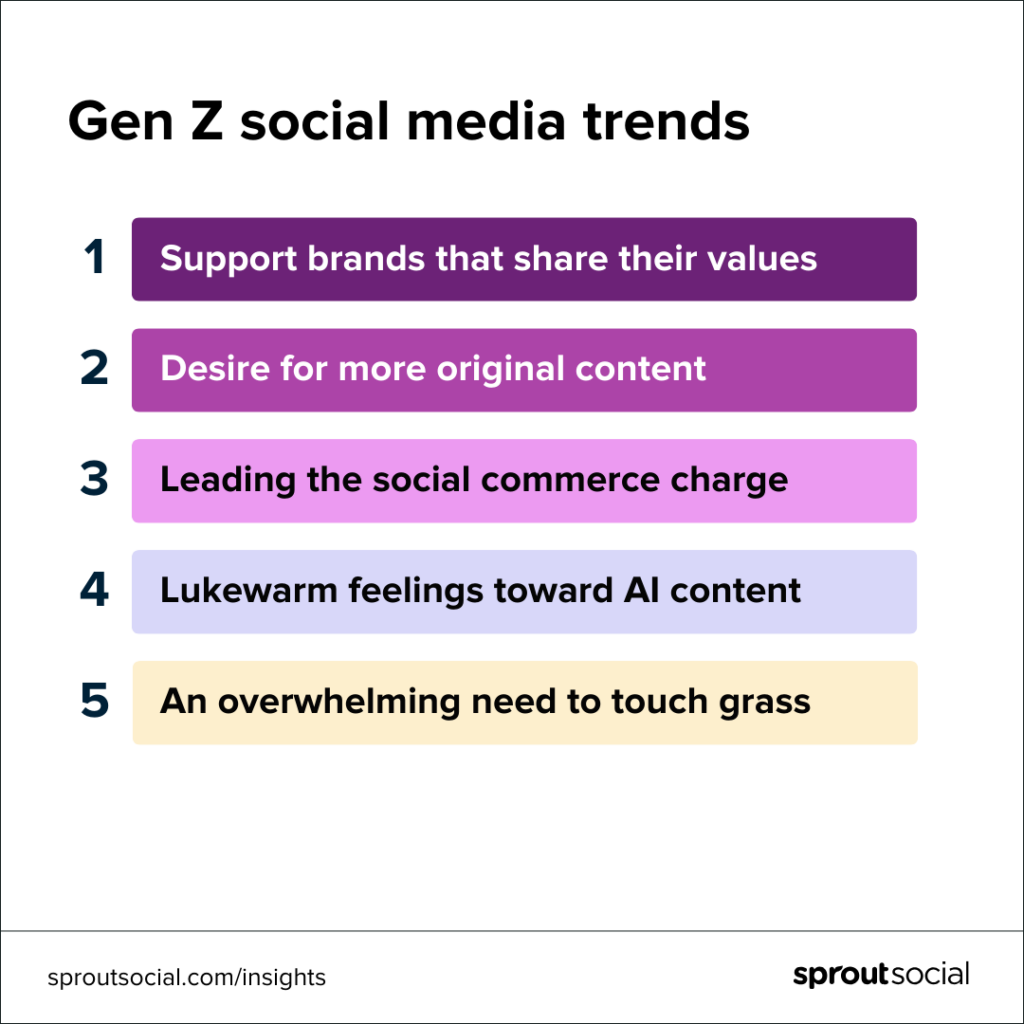
Source: (SproutSocial)
This means event organizers must optimize content not only for Google SEO but also for AI-driven recommendation systems.
Why AI Search Matters for Event Marketing?
AI search is reshaping how events compete online.
Traditional SEO focused heavily on:
- Keywords
- Backlinks
- Metadata
- Technical optimization
While these elements still matter, AI-powered search systems now prioritize:
- User intent
- Helpful content
- Engagement quality
- Audience behavior
- Personalization
- Experience-focused information
This shift is pushing event marketers to create more valuable, audience-focused content instead of keyword-stuffed promotional pages.
AI Search Understands User Intent
One of the biggest advantages of AI-powered search is intent recognition.
For example, when users search:
- “Best live concerts near me”
- “Top business conferences this month.”
- “Family-friendly festivals this weekend”
AI systems analyze:
- Search history
- User location
- Device activity
- Online interests
- Previous engagement patterns
to recommend highly relevant events.
This creates a more personalized experience for users while helping event organizers reach more qualified audiences.
Studies suggest personalized recommendations can improve conversion rates by over 30% compared to generic promotions.
Personalized Event Recommendations Are Growing Rapidly
Streaming platforms like Netflix and Spotify transformed entertainment using recommendation engines. The event industry is now following the same direction.
AI-powered systems can now recommend:
- Concerts based on music taste
- Sports events based on fan interests
- Conferences based on professional activity
- Festivals based on audience behavior
This personalization increases:
- Ticket sales
- Audience retention
- User engagement
- Repeat attendance
Consumers are far more likely to attend events that feel specifically tailored to their interests.
Voice Search is Changing Event SEO
Voice search continues to grow rapidly with smartphones and smart speakers.
Users now ask conversational questions such as:
- “What concerts are happening near me tonight?”
- “Best networking events this weekend”
- “Upcoming food festivals nearby”
According to recent statistics, nearly 50% of online searches are expected to become voice-based in the coming years.
Voice searches are different from traditional searches because they are:
- More conversational
- Longer in structure
- Intent-focused
This means event marketers must optimize websites using:
- Natural language
- Question-based content
- FAQ sections
- Conversational keywords
Voice-friendly content improves visibility across AI assistants and smart devices.
AI Search Rewards High-Quality Content
Modern AI search systems prioritize content that is:
- Informative
- Helpful
- Human-readable
- Well-structured
- Experience-focused
Low-quality keyword stuffing is becoming far less effective.
Instead, search engines now reward:
- Long-form educational blogs
- FAQ-rich content
- User-focused event guides
- Detailed event pages
- Interactive experiences
Research suggests long-form content often ranks higher because it provides deeper value and increases time spent on pages.
This is why event businesses are increasingly investing in SEO-focused content marketing strategies.
Video Content is Becoming Essential
Video has become one of the most powerful tools in AI-powered event marketing.
Platforms like:
- TikTok
- Instagram Reels
- YouTube Shorts
are heavily influencing event discovery through AI recommendation algorithms.
Statistics show that video content can generate up to 1200% more shares than text and image content combined.
Event marketers now use video for:
- Event teasers
- Behind-the-scenes footage
- Artist interviews
- Audience testimonials
- Venue previews
- Crowd reactions
Video content improves:
- Audience engagement
- Watch time
- Social visibility
- AI recommendation potential
AI systems prioritize content that keeps users engaged longer.
Social Media Algorithms Are Acting Like Search Engines
Social media platforms are no longer just networking apps — they are now AI-powered search and discovery engines.
TikTok, Instagram, and YouTube use AI algorithms to determine:
- What users watch
- Which events appear in feeds
- What content gets promoted
This means event marketers must create content designed specifically for:
- Engagement
- Watch time
- Shares
- Comments
- Audience interaction
Research indicates that users now spend an average of over 2 hours daily on social media platforms, making these channels critical for event visibility.
AI is Improving Event Advertising
Artificial intelligence is making digital advertising smarter and more efficient.
AI-powered ad systems can:
- Predict audience behavior
- Personalize advertisements
- Optimize campaigns automatically
- Improve conversion rates
- Reduce wasted advertising spend
Platforms like Google and Meta increasingly rely on machine learning algorithms to improve ad targeting.
This helps event organizers:
- Reach the right audiences
- Improve ticket sales
- Maximize marketing ROI
Some studies suggest AI-driven ad optimization can improve campaign efficiency by over 25%.
Predictive Analytics is Changing Event Marketing
Predictive AI is becoming one of the most valuable technologies in the event industry.
AI-powered analytics tools can now forecast:
- Ticket demand
- Audience preferences
- Popular event categories
- Peak buying periods
- Engagement trends
This allows organizers to optimize:
- Ticket pricing
- Marketing budgets
- Campaign timing
- Audience targeting
Predictive marketing helps event businesses make smarter decisions instead of relying on guesswork.
Local SEO is More Important Than Ever
AI-powered search systems strongly favor location-based personalization.
When users search:
- “Concerts near me”
- “Business events nearby.”
- “Weekend festivals”
- “Live entertainment tonight.”
AI systems prioritize geographically relevant results.
This makes local SEO a major growth strategy for event organizers.
Effective local SEO includes:
- City-based keywords
- Location pages
- Google Business Optimization
- Local event blogs
- Structured event data
Organizers promoting music festivals in California can improve visibility significantly by optimizing content around local audience intent and regional entertainment searches.
AI Search Prioritizes User Experience
Search engines increasingly reward websites that provide excellent user experiences.
Important ranking factors now include:
- Mobile optimization
- Fast loading speeds
- Secure browsing
- Easy navigation
- Clear page structure
Research shows that even a one-second delay in page loading can significantly reduce conversion rates.
Poor website experiences hurt:
- SEO rankings
- Ticket sales
- Audience retention
- Brand trust
Modern event audiences expect seamless digital experiences from discovery to checkout.
AI Search and the Rise of Conversational Marketing
Conversational AI is changing how audiences interact with event brands.
AI-powered chatbots and assistants can now:
- Recommend events
- Answer FAQs
- Provide ticket information
- Assist with bookings
- Improve customer support
Consumers increasingly expect instant responses and personalized communication.
AI-driven conversational marketing improves:
- Customer engagement
- User satisfaction
- Conversion rates
This trend is expected to grow rapidly in the coming years.
Why Content Marketing Matters More in AI Search?
Content marketing is becoming one of the most important growth strategies for event businesses.
AI-powered search systems prioritize websites that provide:
- Helpful information
- Educational content
- Audience value
- Trustworthy insights
This is why blogs, FAQs, guides, and informative event pages are becoming essential for visibility.
High-quality content helps event websites:
- Rank higher on Google
- Appear in AI-generated recommendations
- Increase organic traffic
- Improve authority
- Build audience trust
SEO-driven content marketing reduces dependency on paid advertising over time.
Future of AI Search in Event Marketing
AI search is still evolving rapidly, and its impact on the event industry will continue growing.
Future trends may include:
- Hyper-personalized event discovery
- AI-powered ticket pricing
- Conversational ticket booking
- Smart event assistants
- Predictive audience engagement
- Real-time recommendation systems
As AI becomes more advanced, successful event marketers will increasingly focus on:
- Audience experience
- Personalized engagement
- Interactive content
- Emotional storytelling
- Community building
The future of event marketing will be driven by intelligent audience connection rather than simple advertising.
How Event Organizers Can Adapt to AI Search
To stay competitive in the AI-driven digital landscape, event organizers should focus on:
1. Creating High-Quality SEO Content
Publish informative blogs, FAQs, guides, and educational content.
2. Optimizing for Conversational Search
Use natural language and question-focused content.
3. Investing in Video Marketing
Create engaging short-form videos for AI-driven platforms.
4. Improving Website Experience
Ensure websites are mobile-friendly, fast, and easy to navigate.
5. Using Data & Analytics
Track audience behavior and optimize campaigns continuously.
6. Building Community Engagement
Focus on audience relationships instead of only selling tickets.
Final Thoughts
AI search is fundamentally changing how audiences discover, evaluate, and engage with events online.
The future of event marketing is becoming:
- More personalized
- More intelligent
- More experience-focused
- More data-driven
Traditional marketing alone is no longer enough. Event organizers must now optimize for:
- AI-powered discovery
- Voice search
- Conversational content
- Video engagement
- Personalized recommendations
Businesses that adapt early to AI-powered search systems will gain a major advantage in:
- Organic visibility
- Audience engagement
- Ticket sales
- Brand authority
- Long-term event growth
As the digital event landscape continues evolving, AI search will become one of the most powerful forces shaping the future of the global event industry.
FAQs – How AI Search is Changing Event Marketing
What is AI search in event marketing?
AI search uses artificial intelligence to personalize event discovery based on user behavior, preferences, engagement patterns, and search intent.
Why is AI search important for event organizers?
AI search helps organizers reach highly relevant audiences through personalized recommendations and smarter event discovery systems.
How does voice search affect event SEO?
Voice search uses conversational language, so event websites should optimize for natural phrases, questions, and FAQ-style content.
Why is video important in AI-powered event marketing?
Video content generates higher engagement and is heavily prioritized by AI recommendation algorithms on platforms like TikTok and YouTube.
How does AI improve event advertising?
AI helps optimize ad targeting, predict audience behavior, personalize campaigns, and improve marketing ROI.
What role does local SEO play in AI search?
Local SEO helps events appear in geographically relevant searches such as “concerts near me” or “festivals this weekend.”
How can event websites rank higher in AI-powered search?
Websites should focus on high-quality content, mobile optimization, fast loading speeds, structured information, and audience-focused experiences.
What are the future trends in AI event marketing?
Future trends include predictive analytics, AI-powered ticketing, conversational booking systems, personalized event discovery, and smart audience targeting.