

Influencer Marketing for Events: Does It Still Work?
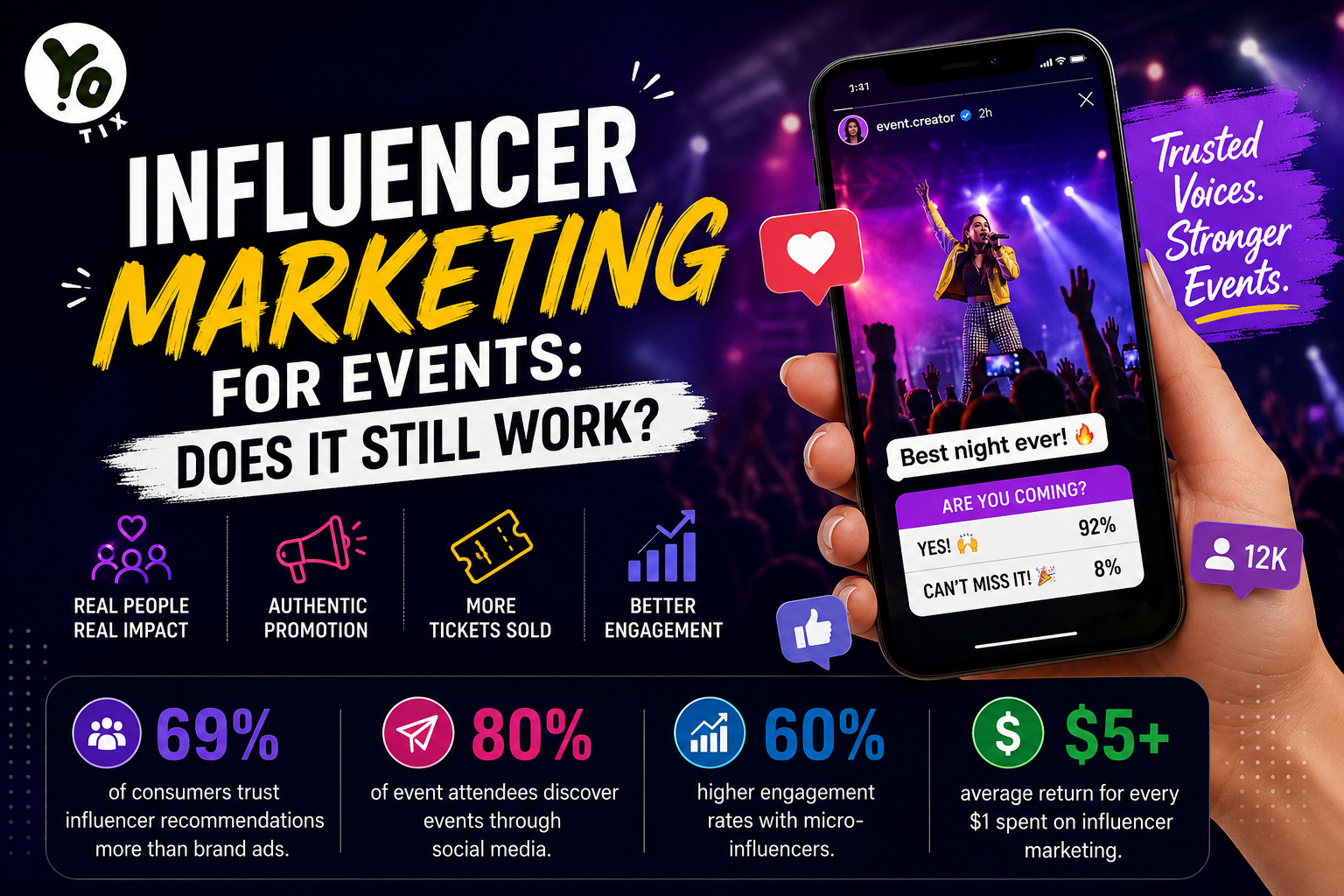
In the fast-changing digital world, event marketing strategies continue to evolve every year. From social media ads to AI-powered campaigns, organizers are constantly searching for better ways to attract audiences and increase ticket sales. Yet one strategy still remains highly relevant — influencer marketing.
But with changing algorithms, audience behavior, and increasing ad fatigue, many event organizers are asking the same question: Does influencer marketing still work for events in 2026? The answer is yes — but only when done strategically.
Why Influencer Marketing Became Powerful for Events?
People trust people more than advertisements. That simple fact is the foundation of influencer marketing. According to recent industry reports, nearly 69% of consumers trust influencer recommendations more than direct brand advertisements.
At the same time, short-form creator content on platforms like TikTok, Instagram Reels, and YouTube Shorts continues to outperform many traditional digital ad formats in engagement.
For event organizers, this matters because audiences don’t just purchase tickets anymore — they purchase experiences, emotions, and social moments.
When influencers showcase an event experience, audiences can visualize themselves attending it.
Shift from Celebrity Influencers to Niche Communities
One of the biggest changes in influencer marketing is the rise of micro and niche influencers. Brands and event organizers are now realizing that engagement matters more than follower count.
A creator with 20,000 loyal followers can often generate better event conversions than a celebrity account with millions of inactive viewers.
For example:
- Local food bloggers can promote food festivals effectively.
- Gaming creators can drive audiences to esports events.
- Fitness influencers can increase registrations for wellness expos.
- Music creators can build hype around concerts and nightlife events.
This targeted audience approach improves both ticket sales and audience quality.
Why Influencer Marketing Still Works for Events
Creates Social Proof
People naturally trust recommendations from creators they follow. When attendees see influencers sharing event content, it builds credibility and curiosity around the event.
This is especially important for new or growing event brands trying to establish authority in a competitive market.
Boosts Organic Reach
Social platforms prioritize engaging content. Influencers understand platform trends better than most brands and know how to create content that performs naturally.
Short-form videos, livestreams, backstage clips, countdown stories, and audience reactions often generate stronger engagement than direct advertisements.
Increases FOMO
Fear of missing out remains one of the strongest drivers in event marketing. Influencers amplify excitement by showcasing exclusive access, VIP moments, early previews, and live experiences.
When audiences see others enjoying an event in real time, ticket demand can increase rapidly.
Supports Multi-Platform Promotion
Modern influencer campaigns are no longer limited to Instagram posts. Event promotions now spread across:
- TikTok
- YouTube Shorts
- Twitch
- Podcasts
- Discord communities
- Live streaming platforms
This multi-platform visibility creates stronger audience awareness.
Biggest Mistakes Event Organizers Make
While influencer marketing remains effective, many campaigns fail because event organizers focus on vanity metrics instead of actual performance.
Here are common mistakes:
- Choosing influencers based only on follower count
- Ignoring audience relevance
- Lack of tracking links or promo codes
- Poor campaign timing
- One-time collaborations instead of long-term partnerships
- Overly scripted content that feels unnatural
Audiences today can quickly recognize forced promotions. Authenticity is the key to success.
Rise of Data-Driven Influencer Campaigns
Modern event campaigns are becoming more measurable than ever before. Organizers now use analytics tools to track:
- Ticket conversions
- Engagement rates
- Audience demographics
- Click-through rates
- Event registrations
- ROI per influencer
AI-powered event platforms are also helping organizers identify which creators drive the highest engagement and ticket sales.
This shift from “brand awareness only” to performance-focused influencer marketing is changing how events invest in creators.
Local Influencer Marketing is Growing Rapidly
Local creators are becoming extremely valuable for regional events because they understand community culture and audience behavior better than global influencers.
For example, event organizers promoting live performances in San diego often collaborate with local lifestyle creators, musicians, nightlife bloggers, and entertainment pages to build authentic regional buzz.
This localized strategy helps events reach audiences more effectively while keeping marketing budgets under control.
Influencer Marketing in the Future of Events
Influencer marketing is no longer just an optional promotional tactic. It has become part of the event experience itself.
In the coming years, we can expect:
- AI-powered creator matching
- Real-time campaign tracking
- Virtual influencer collaborations
- Interactive livestream partnerships
- Creator-hosted event communities
- Personalized audience targeting
As audience attention becomes harder to capture, trusted creators will continue playing a major role in event discovery and engagement.
Final Thoughts
So, does influencer marketing still work for events?
Absolutely — but success now depends on strategy, authenticity, audience targeting, and measurable results. Event organizers who focus on meaningful collaborations instead of vanity metrics are seeing stronger engagement, better ticket sales, and improved audience loyalty.
In today’s competitive event industry, influencer marketing is no longer just about visibility. It’s about creating experiences people want to be part of, share online, and remember long after the event ends.
FAQs – Influencer Marketing for Events
1. Does influencer marketing really work for events?
Yes, influencer marketing remains highly effective for events because it builds trust, increases social engagement, and creates excitement among targeted audiences. Many event organizers use influencers to improve ticket sales and boost online visibility.
2. Why is influencer marketing important for event promotion?
Influencer marketing helps events reach engaged audiences through authentic content instead of traditional advertisements. Influencers create social proof, increase brand awareness, and encourage followers to attend events.
3. What type of influencers are best for events?
Micro and niche influencers often deliver better engagement than celebrities because their audiences are more loyal and targeted. Local influencers are especially effective for regional events and live experiences.
4. How do influencers help increase ticket sales?
Influencers promote events through videos, stories, livestreams, reviews, and behind-the-scenes content. Their recommendations encourage followers to trust the event and purchase tickets.
5. Is influencer marketing better than traditional advertising?
Both strategies can work together, but influencer marketing usually creates higher engagement and authenticity. Audiences often respond more positively to creator recommendations than direct promotional ads.
6. What social media platforms work best for event influencer marketing?
Popular platforms include:
- TikTok
- YouTube
- Twitch
The best platform depends on the event type and target audience.
7. How can event organizers measure influencer marketing success?
Success can be measured using:
- Ticket sales
- Promo code usage
- Website traffic
- Engagement rates
- Reach and impressions
- Event registrations
- ROI tracking
8. Are micro-influencers better for event marketing?
In many cases, yes. Micro-influencers often have stronger audience trust and higher engagement rates compared to larger celebrity accounts, making them cost-effective for event campaigns.
9. What are the biggest mistakes in influencer event marketing?
Common mistakes include choosing influencers based only on follower count, using overly scripted promotions, ignoring audience relevance, and failing to track campaign performance.
10. How is AI changing influencer marketing for events?
AI helps organizers identify the right influencers, track campaign performance, analyze audience engagement, and improve event marketing strategies using real-time data insights.
11. Can influencer marketing help local events grow?
Absolutely. Local creators help regional events reach nearby audiences more effectively by promoting authentic community-focused content and increasing local awareness.
12. What is the future of influencer marketing in the event industry?
The future includes AI-powered creator matching, interactive livestream collaborations, virtual influencers, personalized audience targeting, and deeper integration between creators and event experiences.